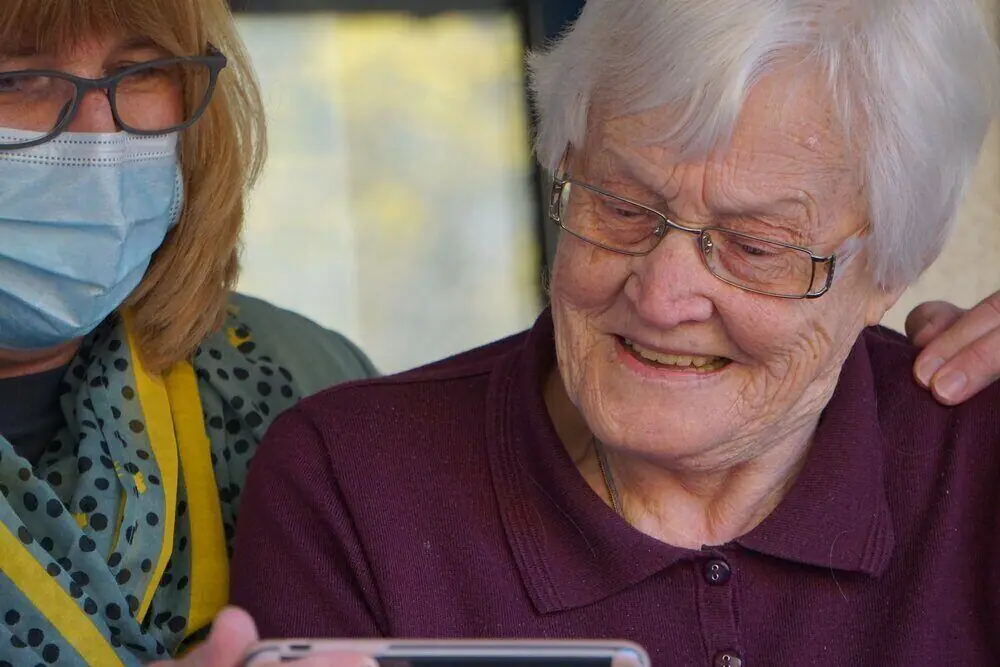
Last year was tough on everyone. People got separated from their families, lost their jobs, stopped meeting their friends, went through mental breakdowns, and experienced a bunch of weird stuff. It’s no wonder that now that we’re kind of reuniting with our loved ones, many feel like something’s not the same about some members of our families, especially the elderly. Experts say much of this could be due to social isolation.
According to a National Institutes of Health (NIH) study, social isolation could amplify sleep deprivation, fatigue, and depression in senior citizens. It could lead to behavioral, physical, and sometimes, even cognitive changes.
So, it’s natural for you to feel the need to take extra care of your elders. Some of you might even want to become their constant caregivers. But is that enough? Will it help them with their problems?
Is becoming a caregiver a good idea?
Though becoming a caregiver for your aging parent could be the noblest job, it’s not always a good option. Sometimes that person could need medical attention or simply a friend, and you might not always be available, or worse, be a misfit.
An associate professor of Geriatrics and Palliative Medicine at the Icahn School of Medicine, Dr. Jennifer Reckrey, says the needs of one senior could completely differ from others. She suggests one should look at the behavioral changes in the senior person and then decide whether or not to approach a professional.
When to call a professional?
Noticing these changes wouldn’t be very simple. You’ll have to observe keenly to spot the problems if any. The trick lies in not being pushy but staying calm.
Behavioral Changes
When you’ve spent years with a person, you know what he or she’s like. For instance, a person who has been calm all his life could lately be irritated at the smallest of things. Things like late payments, unopened mails, bounced checks could make him furious. If you’re noticing such changes in a family member, you need to call for professional help.
Physical Changes
Again, these are also easily identifiable. If a senior is losing a lot of weight, following an uneven diet pattern, having trouble moving or sitting in one place, or avoiding personal hygiene, he or she is struggling.
Sometimes you might notice some bruises or cuts on that person’s body, and when you ask, they’d avoid that question. Chances are they’ve got these in an accident or by falling, and they’re embarrassed to share it with you. In such circumstances, you should contact a professional and follow their advice.
Cognitive Changes
Usually, with age, people’s mental ability weakens. But that doesn’t mean they won’t remember basic things like taking their medicines, doctor’s appointments, or other important stuff. Forgetting something once or twice is natural, but doing it constantly might be a sign of early dementia or Alzheimer’s disease.
The golden rule
By now, you might have figured out the problem, and you would even be ready to take a professional caregiver’s help. But before you take any step further, talk to your elders and explain to them why it’s important to do so. Talk sensibly and say that it’s for their benefit and how it’ll give them the chance to enjoy some personal time. Keep in mind that if you do the reasoning correctly, things will become simpler with time.